
Written by Alec McMorris
Staying Active Can Look Different for Everyone
Like everything that comes with being an amputee, staying active may require a different approach, but it doesn’t have to mean giving up the activities or the sense of possibility that movement can bring.
When we hear the word “Athlete” we automatically think of paralympians and professional competitors, but the majority of “athletes” aren’t paid for their activity. We are all athletes when being active. After amputation, it comes down to what sport or hobby you enjoy, not what activities you can compete in. Being active can include:
- Walking or wheeling outdoors
- Swimming
- Cycling or hand cycling
- Strength training
- Yoga, stretching, or balance exercises
- Recreational games
- Community sports
- Competitive adaptive athletics
You do not need to identify as an athlete to benefit from movement. Activity can support enjoyment, confidence, social connection, strength, and independence. Being physically active is a key aspect of being human.
What are Adaptive Sports?
Adaptive sports are forms of exercise that are modified to make participation more accessible. These modifications may involve equipment, rules, surfaces, coaching, or the way the activity is organized. There are also many adaptive organizations built around helping those of us with the need for adaptive equipment.
There are many types of adapted sports. Some are common activities with modifications for specific ability levels, while others are designed specifically for the ability level.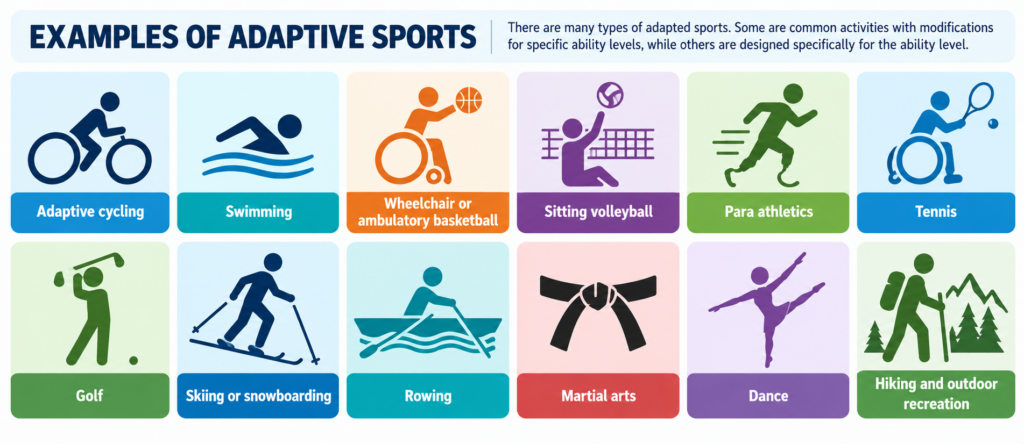 My activity of choice is snowboarding. Living in Utah I have access to world class resorts minutes from my house. Shortly after I lost my leg, I started working with programs like the National Ability Center and Wasatch Adaptive. These programs helped me learn how to engage with snowboarding again, in a safe way. Many programs welcome beginners and focus on participation, skill-building, recreation, and community.
While having a specialized prosthesis may help you adapt to certain activities more easily, they are not necessary for you to try something new. Finding the activities that you can benefit from is the first goal.
Exploring Activities that Fit Your Interests
It helped me to begin with things that I enjoyed before my amputation, or things that I had interest in. Engaging in these activities also helped my recovery. Being active helped me not compare myself to others and focus on my own progress.
Water based activities like swimming, kayaking, paddleboarding, or aerobics are easily accessible and really don’t require any adaptive equipment for lower limb amputees. Things like hiking, fishing, or adaptive climbing, also can be done with your everyday device. Or no device at all.
If you like being around other people in a structured environment, it might be nice to try a dance, fitness, or adaptive yoga class. If you like being on your own, things like golf, stretching, walking/running are all great options.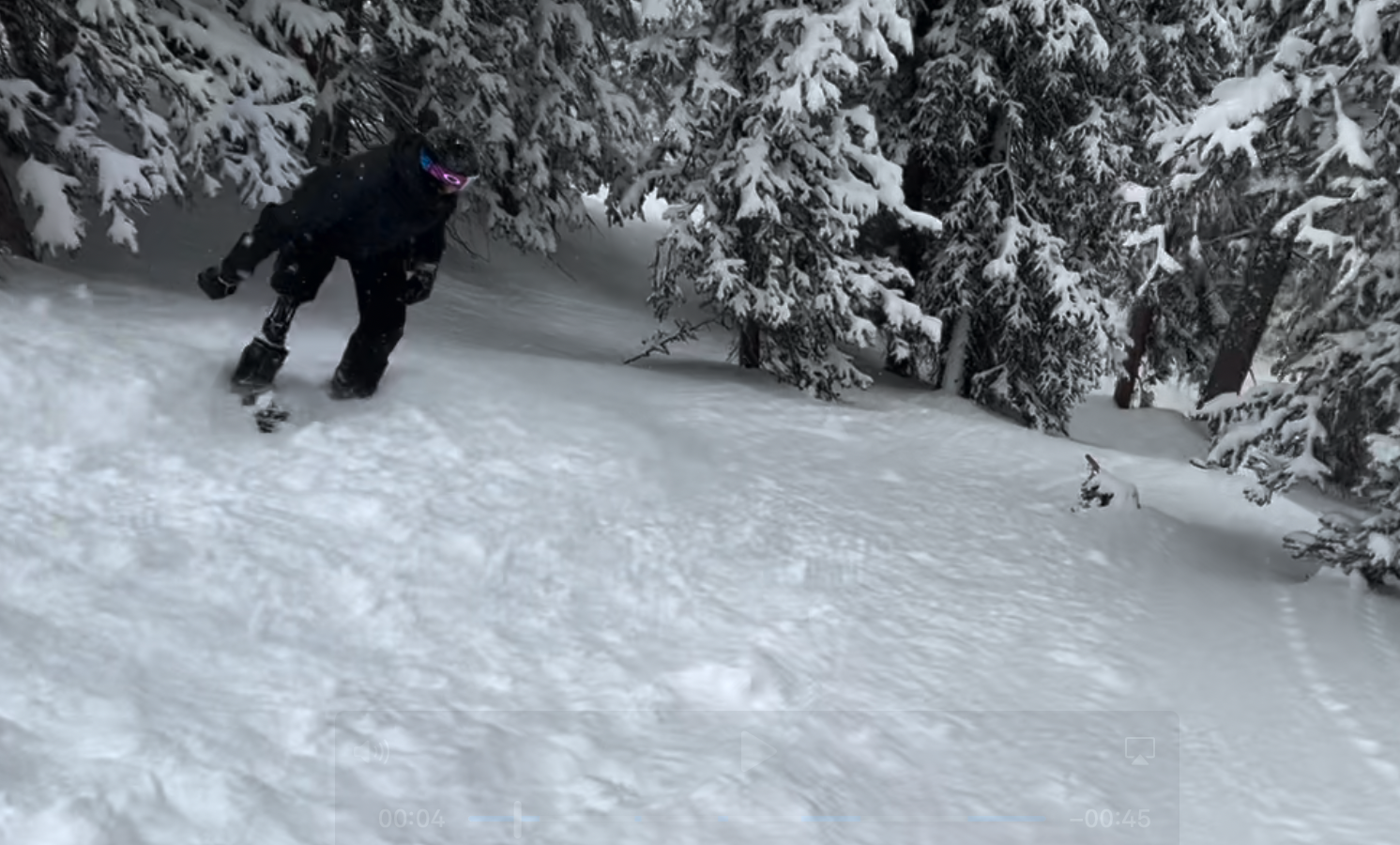
For me, snowboarding became my “activity of choice” after time. But initially I enjoyed group yoga and kayaking. They were easy ways to get out of the house and be social, without feeling pressure or anxiety of what I was “supposed” to be doing. Try things based on your own curiosity, and do your best to not compare yourself to others that you may perceive as “ahead” of you.
How Technology Can Support Participation
In order to snowboard at the level I want to, I need specific prosthetic devices. I view these devices as tools to accomplish a task more than seeing them as just my prosthesis. There are many, many tools to help you adapt. Some are activity-specific components, many are not:
- Activity-specific prosthetic components
- Running or cycling equipment
- Adaptive bicycles or hand cycles
- Wheelchairs designed for sport or outdoor use
- Specialized seating or supports
- Grips, braces, poles, or other assistive equipment
- Wearable devices that track movement or activity
- Accessible fitness machines and modified gym equipment
These tools are not always highly specialized or expensive. Sometimes a simple adjustment, a different attachment, supportive footwear, or a change in positioning can make an activity more comfortable.
Equipment should be explored with appropriately qualified professionals and fitted or adjusted according to your needs and goals. No particular device guarantees performance or is appropriate for everyone. You can always speak with your prosthetist or physician about what may be right for you.
Starting Safely and Building Confidence
Let’s say you have decided that you want to try adaptive kayaking. This would be a natural progression to begin kayaking safely.
You have a kayak from before your limb loss that will work great. You have cleared with your healthcare team that you can try this activity.
For your first outing you would want to find a small lake or pond with relatively calm water. As well as somewhere that isn’t very busy, but it isn’t empty either. You have a friend with you, of course, but it is nice to have even more extra hands around, just in case.
You find a nice gradual slope to drag the boat to and climb in. Maybe you hand your friend your prosthesis and they put it back in the car while you’re on the water. Maybe you keep it on and it fits nicely in the boat. Whatever works for you. You have a successful day kayaking and want to continue growing your abilities in the boat.
You could look for instructors or coaches in your area with experience supporting individuals with adaptive needs. You could see if your physical therapist or prosthetist has any experience helping other patients kayak or improving their kayaking equipment for specific adaptations. 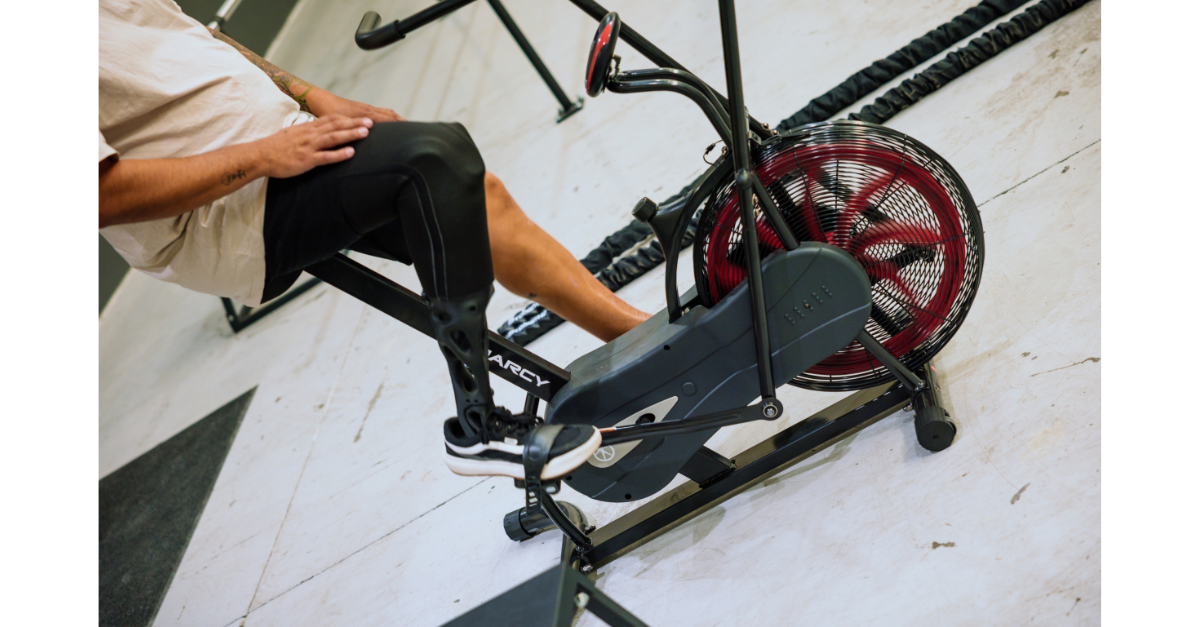
You get improved equipment and work with your healthcare team to understand how to approach the movements in better ways. Involving your care team will help you ensure that you are doing things safely and can help you solve unique physical/equipment challenges.
Now you start to notice progress. Which does not always mean speed, distance, or competition. Your measure of progress starts with the first day you got in the water. It can be just feeling more comfortable in the boat, sometimes it is knowing when to take a break. Often, progress is just deciding to continue.
Building up slowly and recognizing small accomplishments helps to see how far you have come. I know it has given me more confidence and enjoyment from my activities.
The Role of Community and Support
I personally have grown through adaptive sports, socially more than in any other area. I have met people on a snowboard I would have never met otherwise. A lot of people ask me about my leg when I am at the resort. Some I will talk with and tell my story, others I turn my headphones up. If you have been there, you know.
I have met many other amputees that enjoy winter sports and it is always incredible to ride with them. It is a unique experience. I have grown so much closer with my little sisters by skiing with them every weekend, and I asked my wife to marry me at the resort. I also really love to go by myself. Finding something you can enjoy with others or on your own is how you know you really like it, in my opinion.
Navigating around the resort when I first started helped me build confidence in crowds. It helped me build confidence walking on slippery surfaces. It helped me understand my devices better and communicate my needs to my prosthetist in more insightful ways.
When I am strapped into my snowboard, I am not an amputee. I am not isolated. I have asked for help more times at the resort than anywhere else. I am always surprised at how willing anyone is to help if I ever ask. I have built a little community for myself around my snowboarding, and I cherish that. To me, it is much more than activity. It is art, therapy, and a spiritual connection I didn’t have for a long time. I hope everyone can find something that brings them the same fulfillment.
Redefining What “Possible” Means
What’s possible is not defined by a fixed list of achievements. It looks different for everyone and can mean trying an activity for the first time, returning to something enjoyed before amputation, or discovering a new sport or passion. It might involve becoming more comfortable moving in public, exercising for health and enjoyment, or participating in activities alongside friends and family. It can also mean setting personal goals, celebrating progress at your own pace, and recognizing when rest is just as important as movement.
As amputees we are often told what is possible for us. Since I have become an amputee I have found that what is possible is not determined by our devices or physical abilities. It is commonly defined by our own perception of our capabilities. That is why trying new things is important. Putting yourself out of your comfort zone, when you’re ready, can help you see that you are capable of the same things anyone else is. It may just look a little different.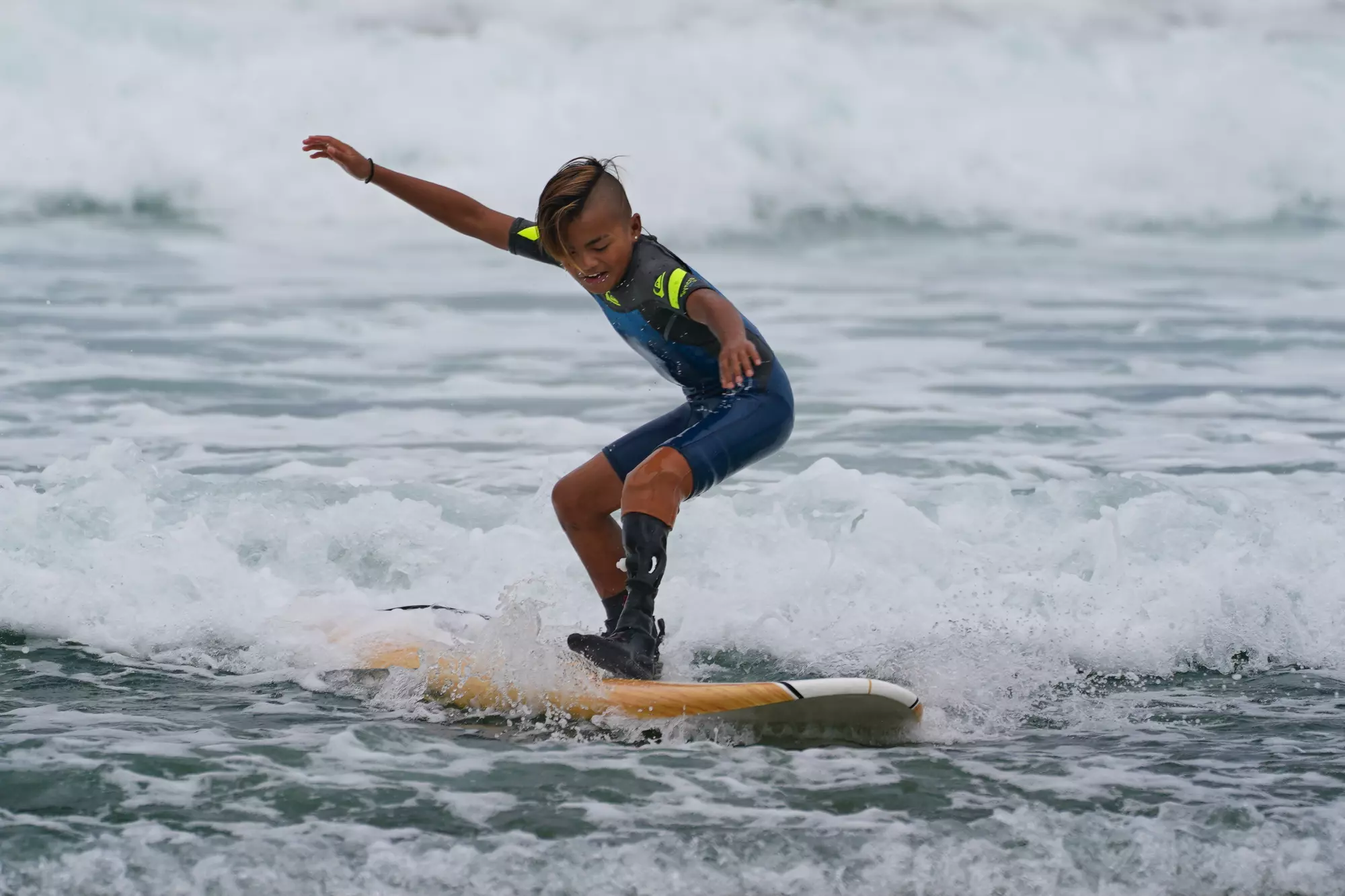
Our bodies, and circumstances change. Energy, pain, access, equipment, finances, and confidence can all affect participation. Adjusting a goal is not giving up; it is part of finding a sustainable way forward. Sustainability is how we can continue to participate in many activities long after limb loss.
Activity and being active also do not define you. It is not every amputee’s goal to snowboard or be a paralympic athlete. A lot of us maybe just want to go on a walk with our spouse without having to adjust our leg halfway through. Others just want to go to their grandson’s baseball game. Being active is not a proof of determination. It is a beneficial way to engage with the world and your community. How it looks is completely up to you, so is what is possible.
Find Your Own Way to Move
Snowboarding has opened up a lot of things for me that I did not know I was missing. For a time, it was a goal of mine to be an “athlete” and compete. I wanted to prove what was possible and all of the things I was capable of. As I have gotten more confident on snow and as an amputee in general, those aren’t goals I have anymore. I cherish that activity and what it provides me.
Through that transformation I have learned that Adaptive sports and technology are not about proving that anything is possible for everyone. They are about creating more opportunities for each person to discover what movement, participation, and enjoyment can look like in their own life. Whether the goal is recreation, connection, fitness, or competition, there may be more options available than you first imagined. What is important is what you gain from the activity, and that is completely up to you.