
Before Alec McMorris’s first trip on a prosthesis, he packed a whole extra bag. Four liners. A pile of socks. Everything he could think of, and then some.
“I had so much anxiety,” he says. “I’m like, ‘Do I have enough? Do I have everything? Am I going to be okay?'”
The bag got smaller over the years. The worry took longer. “I’ve sat out of things and not gone on trips because of that anxiety,” he says.
We sat down with Alec and Courtney Wilkin to ask what amputees pack for a trip. Alec is an above-knee amputee. Courtney is below-knee and has been an amputee since 2004. Both work at Limber: Alec on our team, and Courtney part-time as an amputee liaison alongside her work at a prosthetics clinic. She wears a Px1, the one-piece leg Limber makes.
We expected a packing list. What we got was a conversation about three harder things: asking for help, planning for rest, and letting go of the dread about the airport.
The part everyone dreads
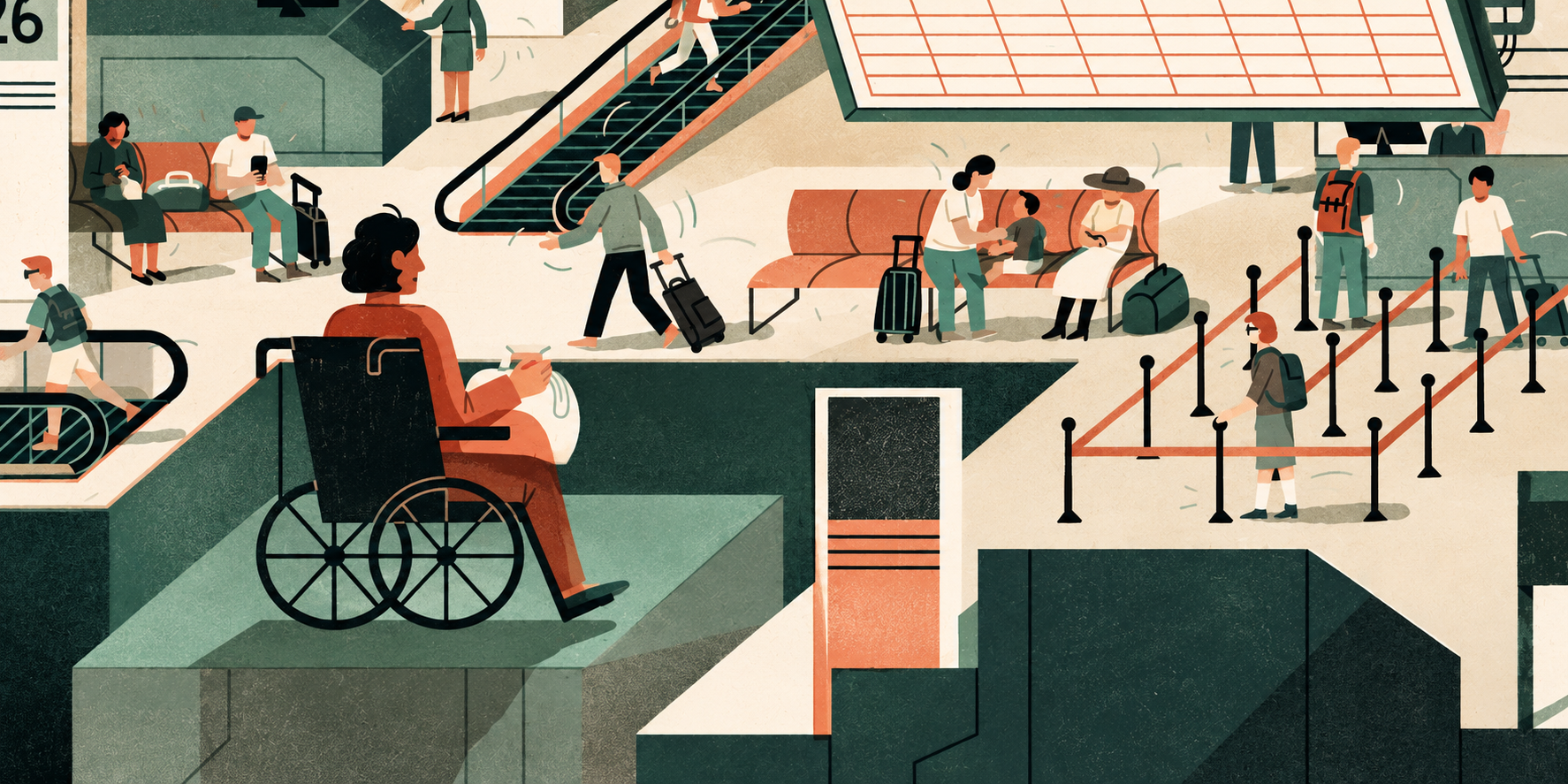
Both took their first trips as amputees in a wheelchair, and both were surprised by how easy it was. Courtney’s was a cruise. “I remember it being extra steps but not extra time, because they let you go in the ADA line,” she says. “I think a lot of people are under the impression that it’s going to take all this extra time to get through security, and really it doesn’t.”
That has held true since she’s been walking. On a recent trip to Las Vegas, she went through the regular line on the way out. On the way home she was tired. “So I went to the ADA line and said, ‘Hey, I can’t stand in this line.’ And they’re like, ‘Yep, sure. Go ahead.'”
Her advice is simple: say what you need. “If you’re walking with a prosthetic and you need a wheelchair, just ask for one.” When she has, someone has taken her to her gate and carried her bags. Alec has asked for help when booking and been met at security and walked to his connections.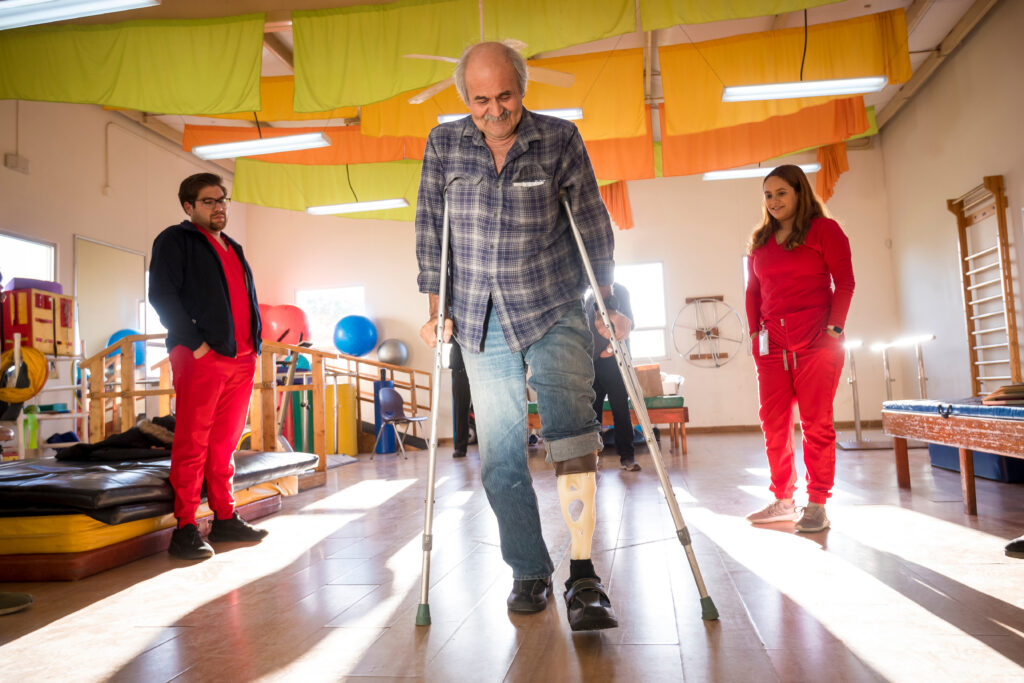
The screening adds a quick swab of your hands and your device. “It’s worth mentioning,” Courtney says, “but don’t plan on extra time for it.” Sometimes it’s even funny. Alec’s spare foot looks enough like a weapon on the X-ray that agents open his bag nearly every time. Coming home from Vegas, they had him pull it out of its foot shell. “I was like, ‘This is just a foot.'”
“I was really stressed about that in the beginning,” he says. “If you need help, TSA will help you for sure.” Flying home from Long Beach, a TSA agent spotted him in a long line and waved him and his brother to the front. “He was like, ‘Don’t wait back there.'”
The harder ask is the one you make of yourself
Navigating the airport turned out to be easy. Letting yourself accept help is harder.
Early on, Alec wouldn’t use the ADA line, and he didn’t want to see the sights from a chair. “I was young and prideful,” he says. Five years ago he and his wife spent a rainy week at Disneyland. By day two his shoes and socks were soaked, and he had a blister the size of a golf ball on the end of his leg. His wife suggested a scooter.
“I was just like, ‘No, I’m not going to do it,'” he says. So he lost a full day of vacation and sat in the hotel room with his leg off.
On his last trip, he got the scooter on day one and managed his leg all week. “Maybe that just comes with time,” he says. “I don’t feel like I have to prove anything anymore, but for a long time I did feel that way.”
Courtney’s version took fifteen years. After her amputation she didn’t own a pair of shorts and wore jeans all summer. Part of it was worry about asking for help when nobody could see why she needed it. Wearing shorts changed that. “When I need an accommodation out in public and I’m wearing shorts, I’m a lot less self-conscious about it, because people can very easily see my limitation.”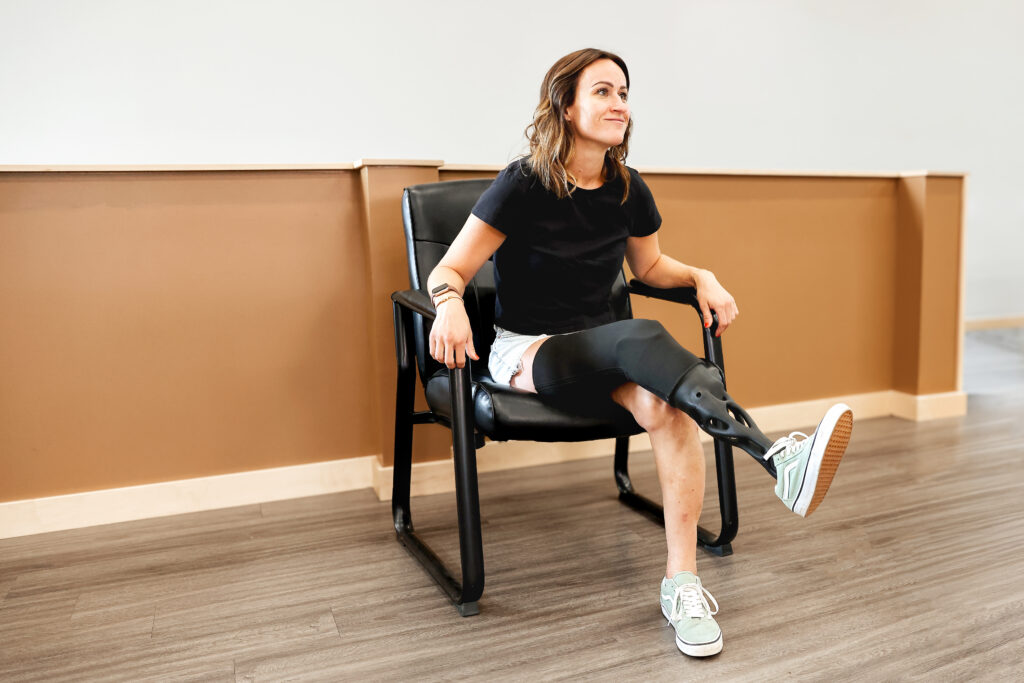
Alec puts it plainly. “You have to be an advocate for yourself. And then you have to put your pride aside and be like, ‘Yeah, I’m going to sit in the chair today.'”
Plan the rest before you need it
Both of them now schedule rest into a trip the way they schedule the fun.
When Courtney’s family went to Disney this spring, they planned it as a day at the park, a day at the pool to rest, then another day at the park. “I could still enjoy my vacation, but I wasn’t overexerting myself, because that’s just miserable for everybody.”
Alec does the same. When his family went to a baseball game on a Disneyland trip, he stayed back at the Airbnb. Vacations mean far more walking than a normal week, and hot spots follow. “The only way for those to heal and get better is to stop and take your leg off,” he says. Planning for it has changed how trips feel. “I don’t feel like I’m falling behind.”
Rest counts on the road, too. Alec takes his leg off for long drives. Courtney wears shorts or pants that let her take hers off without changing.
What’s actually in the bag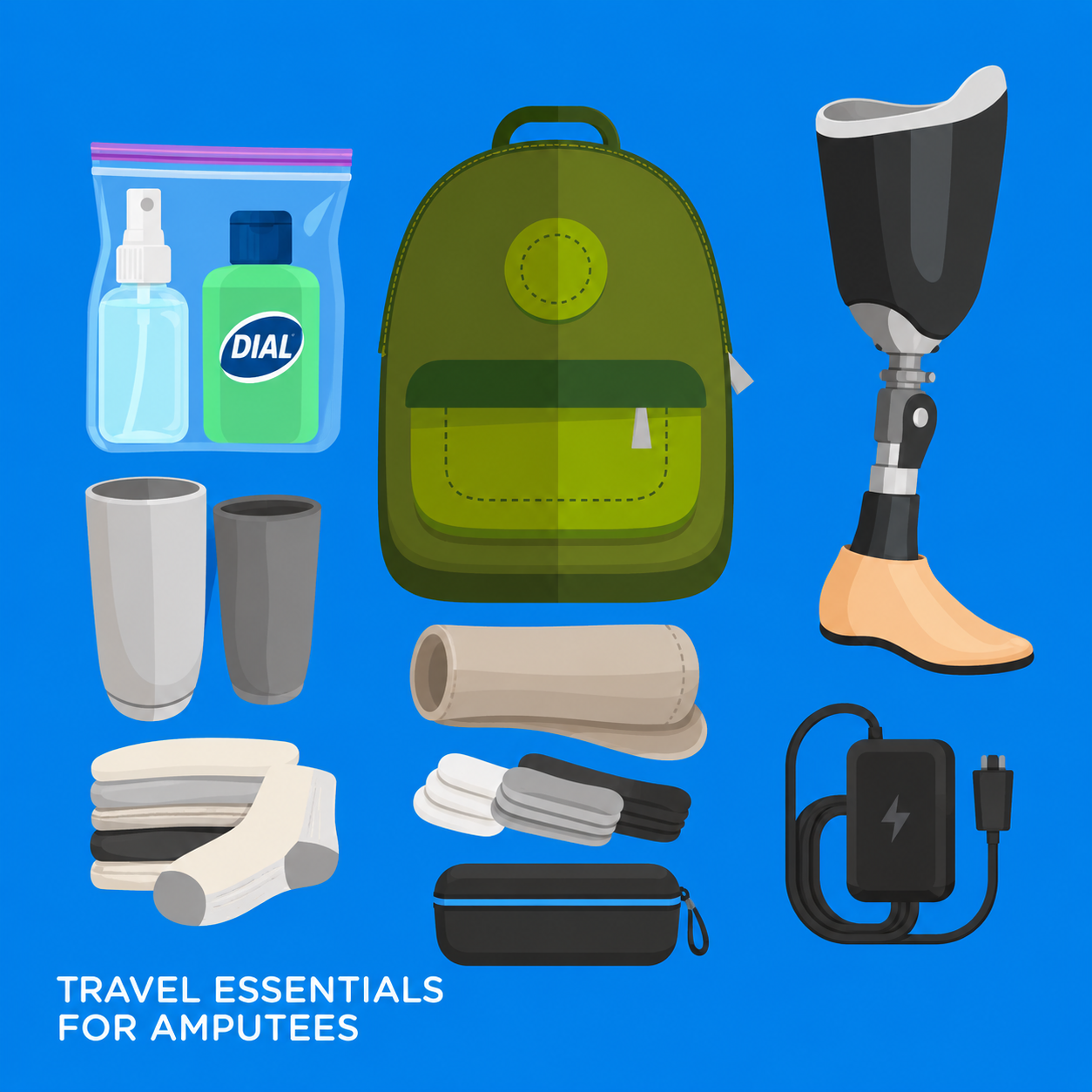
When they got to the kit, it came out as the two of them finishing each other’s lists. Courtney packs a small spray bottle of rubbing alcohol or Dial soap in a Ziploc, to clean her liners. “Otherwise I’m trying to clean my liner with hotel soap. No thanks.” Alec echoes her: “No thanks.”
She brings an extra liner and sleeve, and socks in a few plies. “Nine times out of 10, I don’t need them. But if I do need them, I really need them.”
She takes a spare leg even for an hour’s drive to her mom’s at the lake. Years ago, she learned her lesson when the hardware on a leg she used to wear gave out mid-softball game. A friend carried her to the dugout while someone fetched her spare from home.
Alec never leaves without the charger for his knee. He forgot it once in Boston, and his battery died on a walking tour. A call to his prosthetist found him one nearby. That’s asking for help, too. His other rule is nothing new on a trip. A new socket that fit perfectly in the clinic was miserable on vacation, so now he schedules fittings for after he’s home.
You’ll be glad you went
We asked each for one thing to tell someone packing for their first trip since amputation.
Courtney kept hers short. Pack the spare if you have one. “And then as far as the actual travel, just know that if you ask for what you need, then the airport is the least of your worries.”
“I would just tell them that it’s going to be fun, and you’re going to be glad that you went,” Alec says. “Every time that I put myself out there and try new stuff, even if it’s hard physically, it’s worth doing.”